Genome-wide association study reveals that TaODORANT1 negatively contributes to thousand grain weight by affecting starch synthesis in wheat
Abstract
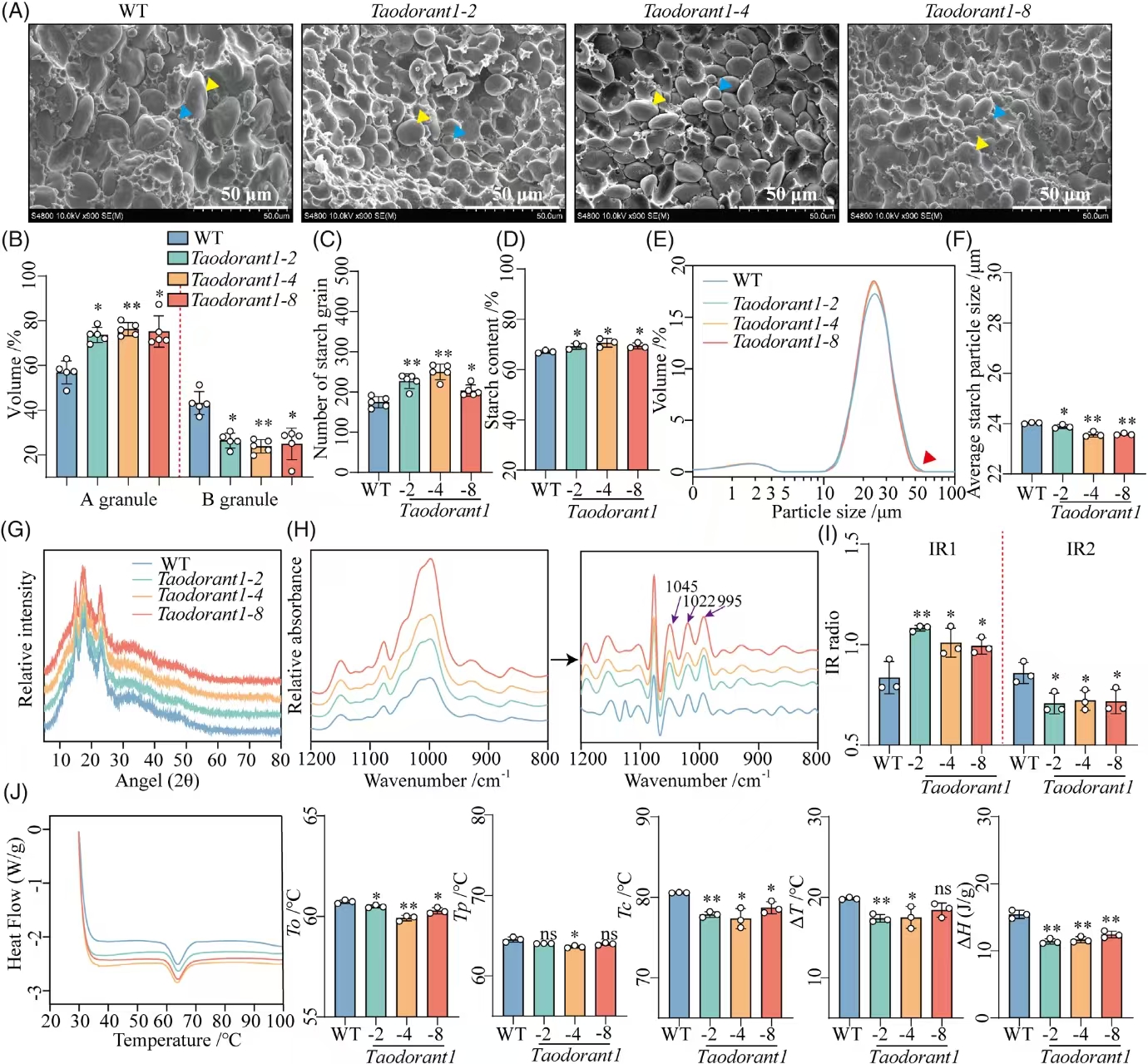
Thousand grain weight (TGW) is one of the most important factors that control grain weight and crop yield.To date, dozens of wheat genes related to TGW have been isolated; however, the underlying molecularmechanisms governing grain development in wheat (Triticum aestivum) remain largely unknown. Benefitng from whole-genome resequencing and genome-wide association study, we identified an R2R3-type myeoblastosis (MYB) transcription factor, TaODORANT1, which was tightly associated with TGW.TaODORANT1 was specifically and highly expressed during the wheat grain developing stage. Knockout of TaODORANT1 led to an increase in TGW and starch content, as well as affected the expression of starch synthesis-related genes. Loss of function of TaODORANT1 altered the molecular structure and physiochemcal properties of grain starch. Haplotype analysis showed that favorable Hap IV of TaODORANT1-A and favorable Hap I of TaODORANT1-B were significantly associated with the production of larger grains and higher TGW, respectively. Moreover, TaODORANT1 was a crucial targeted gene continuously selected in wheat domestication and breeding, and its orthologous genes might have retained similar functions in response to grain development. Our results highlight the importance of TaODORANT1 in affecting TGW, presenting potential targets for improving yield in wheat.