TaJAZ1-mediated transcriptional regulation of starch biosynthesis synergistically enhances resistant starch content and yield in wheat
Abstract
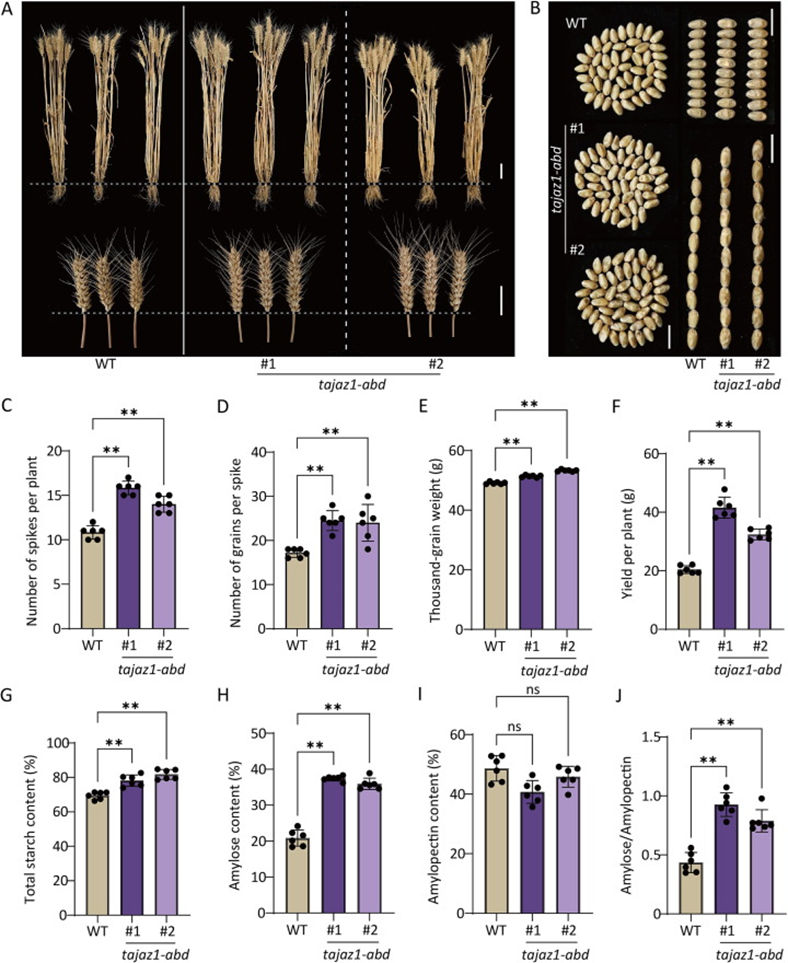
Jasmonate ZIM-domain (JAZ) proteins are key repressors of the jasmonate signaling pathway and are involved in plant stress responses. However, their roles in starch biosynthesis in cereal crops remain unclear. In this study, we identified a locus associated with starch content on chromosome 5A by a genome-wide association study (GWAS). At this locus, a gene (TraesCS5A02G204900) encoding a JAZ protein (TaJAZ1) was found to be highly expressed in grains. CRISPR/Cas9-induced mutants were generated to investigate the role of TaJAZ1 in starch biosynthesis. Phenotypic characterization revealed significant alterations in starch granule size, crystallinity, and digestibility. Specifically, the two mutant lines (tajaz1-abd#1 and tajaz1-abd#2) exhibited increased total starch (12.5% and 17.6%, respectively), amylose (79.3% and 72.1%, respectively), resistant starch (88.5% and 96.8%, respectively), and grain yield per plant (103.8% and 58.8%, respectively). Furthermore, the mutation of TaJAZ1 significantly increased the expression levels of TaSBEI, TaAGPS1, TaAGPL1 and TaGBSSI, but decreased the expression levels of TaSSIIa, TaSSIIb and TaSBEIIa by binding to their promoters. Taken together, our results demonstrate that TaJAZ1 is a negative regulator of starch biosynthesis and grain yield. These findings not only provide novel insights into wheat starch biosynthesis regulation, but also contribute to potential genes for breeding wheat varieties of better quality and higher yield.