The Radiation Sensitive 23B protein regulates root development partly through the E3 ubiquitin ligase EDA40.
Abstract
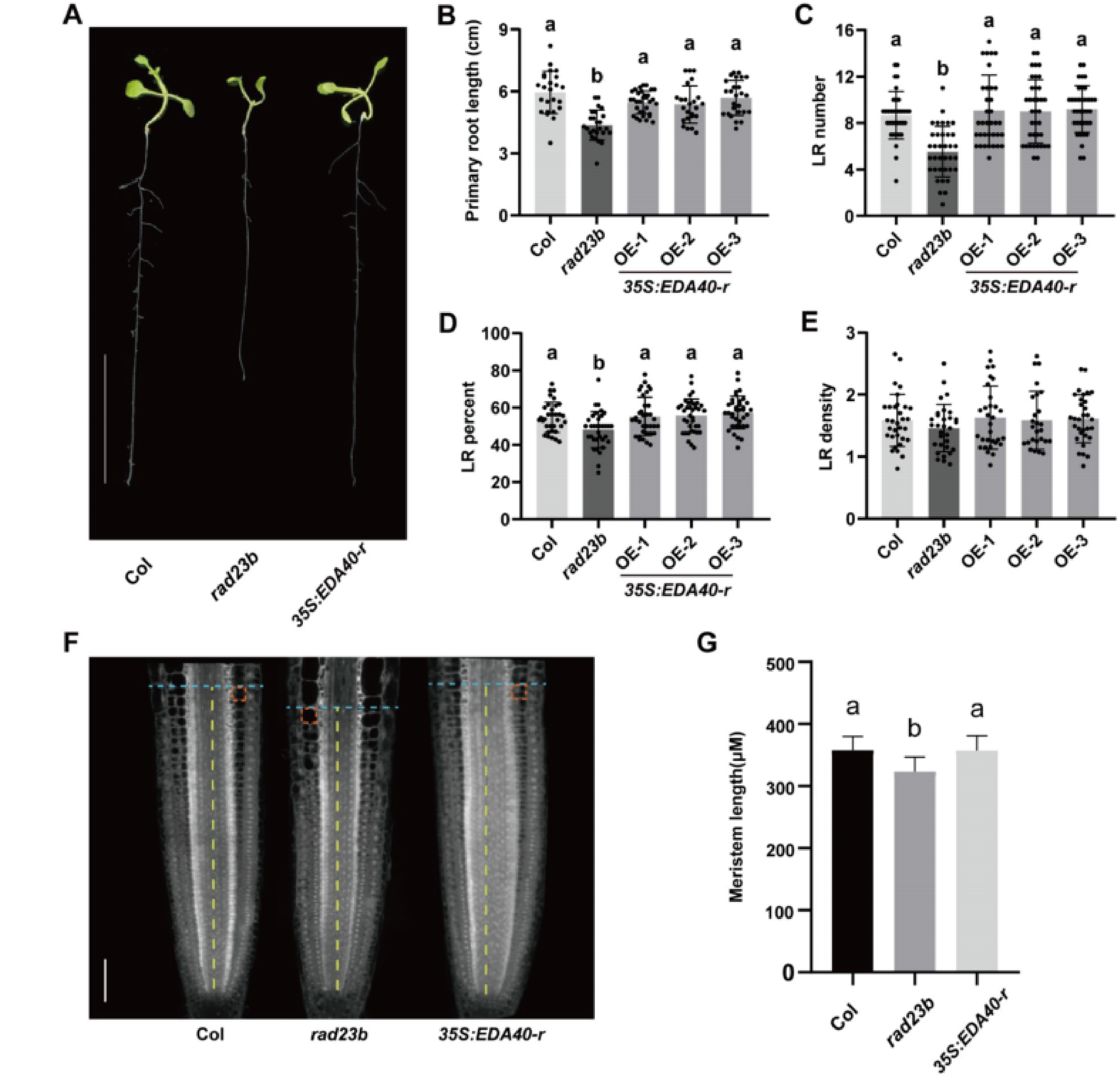
An optimal root system architecture plays a crucial role in water and mineral uptake in plants, primarily governed by the regulation of primary and lateral root development. Radiation Sensitive 23B (RAD23B), an ubiquitin-like/ubiquitin-associated (UBL/UBA) shuttle protein, mediates protein degradation through the ubiquitin/26S proteasome system (UPS) and is essential for plant root development. However, the mechanisms by which RAD23B regulates root development and whether this regulation depends on the UPS, are still unclear. In this study, an activation tagging-based suppressor screen was performed in the rad23b background, leading to the identification of Embryo Sac Development Arrest 40 (EDA40) as a new root growth regulator. EDA40 encodes an E3 ubiquitin ligase, which serves as a part of UPS. The overexpression of EDA40 rescues the root growth defects of rad23b, while the eda40 null mutant exhibits obvious root developmental defects. However, the overexpression of RAD23B is unable to suppress the root defects of eda40. Notably, the rad23b eda40 double mutant displays a root defect as severe as rad23b, suggesting that RAD23 may function upstream of EDA40. Together, these findings uncover a novel genetic relationship between RAD23B and EDA40 in root development and offer new insights into the role of the UPS in shaping root system architecture.
本站总访问量次 本站总访客数人 本文总阅读量次